Wednesday, May 10, 2017

Nifty Newly, featuring Sherry Derr-Wille


Sherry lives in a mid-sized city in Southern Wisconsin. Fifty-three years ago she married Bob, her high school sweetheart, just two days after high school graduation. She's a wife, mother, grandmother, and great grandmother, but "first and foremost," she says, "I’m a writer." She's been producing novel after novel her entire life, with the end result being that she is one of the most prolific authors I've ever heard of. Please welcome Sherry Derr-Wille.


What's the title of the book you're currently working on? 

The Return of the AncientsYou Again

How many books have you written? Published/unpublished? 

78… 76 published, 2 unpublished but contracted.

What genre? 

Romance, family epics, murder mysteries, romance, crime, and erotica.

What inspires you, as a writer? 

I've been writing since I was fifteen. I've tried not writing, but after about twenty minutes I’m back at it again. I write not because I want to but because I have to.

How do you come up with names? 

I have a couple of names that show up quite often ie: Karl & Kate. Usually I wait for the characters to name themselves.

How do you come up with ideas? 

Just when I think I’ve hit a dead end another an idea pops into my head. I've had several times when I'm at a loss and the characters of another book appear out of nowhere. I've also been known to dream the entire plot of books. I live an interesting life with a lot of imaginary friends.

Why is originality important in fiction? Or is it important?

I've been told there are only nine plots in romance. If I’m not original, I’m afraid my fans will be disappointed.

It is very important. Another thing that is important is being completely correct. Readers expect facts to be right and will catch you on it every time. I've been caught once and it wasn't pretty. I tell writers to always check their facts and then check them again. In other words, you need to be more accurate in fiction than in non-fiction.

What would you consider a good example of originality in your fiction? 

Writing in several genres means whatever I write has to be fresh and new. I think the book I have coming out in June from Class Act Books is a good example. Blood Relatives is a crime story set in Chicago. It is out of my comfort zone, but it's also something I wrote many years ago. Unfortunately, when I went to recreate the story, I couldn't find the original so I needed to start from scratch and make it fresh and something unexpected by my fans.

Thank you so much for stopping by and sharing with us, Sherry! If you'd like to learn more about Sherry Derr-Wille, please visit her websites here:

Website: www.derr-wille.com
Blog: www.derr-wille.blogspot.com

For a look at her fiction, check out this excerpt from one of her popular Rhonda Pohs mysteries! 

BLURB from The Man in the Lake, a Rhonda Pohs Mystery. 

Rhonda Pohs has been hired as a token woman cop to say nothing of a grief counselor for the force of Milton, WI, although the town is never mentioned in the book.

When a man, who has been a womanizer all his life, is found floating in Storres Lake, Rhonda is sent to comfort the widow. To her surprise, the man’s mistress is also there.

Throughout the twists and turns of unraveling the murder, Rhonda proves she’s not just the token woman or the grief counselor, she’s a top notch detective and someone to be reckoned with.

EXCERPT from The Main in the Lake (edited for minor profanity):

“I think you ought to take this one, chief,” the secretary said through the intercom.

Jack sighed deeply and picked up the receiver. “Franks here.”

“Jack, this is Al. I just went out to Storrs Lake fishing and there’s a man floating in the middle of the lake.”

The panic in Al’s voice was enough to send chilled shockwaves through Jack’s body. “What do you mean a body is floating in the lake?”

“Just what I said, a--hole. I came out to fish and there’s a body out there in the middle. I haven’t tried to go out and bring him in. He must have drowned, but I’ve seen enough cop shows to know you don’t touch things at a crime scene.”

Jack rolled his eyes. He and Al had been friends since kindergarten and Al tended to exaggerate. If his friend were a woman, Jack’s wife would have called Al a “drama
queen.”

“Are you sure some kids haven’t stolen a mannequin from the mall and dumped it in the lake?”

“Mannequin, hell, this ain’t no mannequin. It’s a man, and he’s dead I tell you. Now get your a-- out here and investigate. That’s your job, after all. You should do something to earn your pay rather than just sitting in the office reading the paper.”

Jack shoved the paper aside, ashamed everyone knew about his duties and reading the paper was all he had to do on a Friday morning. “Okay, I’ll humor you, but if this is one of your practical jokes, so help me Hannah, you’ll pay.”

He hung up the phone, but it rang again before he had the chance to grab his keys and head out the door.

“This is another one you have to take,” the secretary assured him.

“Franks here,” he said, just as he always did when he answered the phone.

On the other end of the line he could hear a woman crying. “This is Kitty Reedman and my husband is missing.”

Jack thought about Karl Reedman. He was hardly what anyone would call a “faithful” husband. He recalled he cheated on his first wife, Barbara, with his second wife, Marie. Then he’d cheated on Marie with his third wife, Christine. Just lately he’d cheated on Christine with his current wife Kitty, so why was Kitty so upset about him staying out all night? He was probably just scouting out wife number five.

 “What do you mean he’s missing, Kitty?”

“Oh Jack, it’s so terrible. Karl went out last night to get a pack of cigarettes and he never came back.”

“Are you sure he’s not with a friend?”

“Positive. I know what you’re thinking. I know all about Susan Barclay. I called her and she hasn’t seen him either.”

“I’ll look into it, Kitty. I have something else I have to do first and then I’ll be right over to file a missing person’s report. I’ll see you in a couple of hours.”

He hung up the phone and wondered where in the h--- he was going to find a missing person’s report form. He knew they were somewhere in the office, but since his secretary, Melissa, arrived and reorganized the filing system he couldn’t find a d--- thing.

“I need a missing person’s report form.” He approached Melissa’s desk. “Do you have any idea where I might find one?”

WHERE TO BUY:

The Rhonda Pohs Murder Mysteries are available at:

Class Act Books: http://classactbooks.com/component/virtuemart/cat-murder-mystery-suspense/the-man-in-the-lake-242013-04-29-03-35-03-detail?Itemid=0

Amazon: https://www.amazon.com/Lake-Rhonda-Pohs-Mystery-Book-ebook/dp/B00GDV938K/

Tuesday, May 2, 2017

Nifty Newly, featuring Paul McDermott


Paul is really good at introducing himself, so I'm going to let him take the floor right away. We'll get to the questions in a minute. Please welcome to Nifty Newly, genre-crossing polymath author Paul McDermott


Hi Jeremy, many thanks for the opportunity to chat with you today!

One thing you’ll have to accept is the indisputable fact that we invented spellings on this side of the Pond, and I have the honour to be a fully paid-up member of the Grammar Nazis and the Punctuation Police.

According to Chinese Astrological charts I was born in the Year of the Tiger, Month of the Panther. As a direct consequence, I have a cat’s tendency to roam, do my own thing. I love my home town, Liverpool but spent most of my working life elsewhere. This included about 20 years in Scandinavia & N. Germany. I trained as a teacher and taught every standard school subject, but curiously I taught very little English all the time I was abroad. I’m ‘native-fluent’ in five European languages – six at a push, mainly because the Jesuit Head Teacher at my Alma Mater insisted on foreign languages being taught by native born teachers. This was reinforced when I went on to Liverpool University, where my English tutor (another Jesuit) was fluent in no less than FORTY-THREE languages! Trivia fact: this year, in the FIVE Universities located in Liverpool there are students from 95 different countries.
Here’s a poem I wrote inspired by this stat. (NB. Line 4. words beginning "ll…" in the Welsh language have a distinct sound. Try 'sounding' something close to 'hklemon' for 'lemon' and you're getting close)

One Hundred Cocktails

A heady mix, bubbling with energy, sure to slake your thirst
The raw ingredients culled from every corner. Who came first?
Welsh Druids settled on the Mersey's banks, and with their songs
They made their mark and lleft their llilting llanguage on our tongues
Norse seamen chanced upon our shores and chose to settle down
Adding names like Kirkdale and Formby, parts of the growing town
Cæsar thought he could rule the world with his fearsome Roman legions
To Britain he came, and yes, he saw – but he couldn't quite conquer this region
Their lasting gift to us was surely the hypocausts: public baths and improved plumbing
A thousand years ago, who would have seen such 'mod. con.' luxuries a-coming?
Certainly not the noisy lot, our troublesome neighbours in the North
Whom Hadrian stalled with a half-built Wall to prevent them sallying forth
“Aye” and “haud yer wheesht” cannae be so hard tae unnerstan' ye'd think
Still we'll sing “Auld Lang Syne” and bid welcome the New Year with drink
Their vowels and growls rotate, mutate, becoming one more aspect
Of the local lingua franca, the proud and inimitable Scouse dialect
Enhanced by the music and laughter of the Irish, forced into exile
When Famine and Death laid waste their green and pleasant isle
The language alters subtly, sometimes from day to day
Marvel at the expresso speech of the Italians down Scottie Road way
Contrast that with the slow, thoughtful reflections handed down
By the Elders enjoying a game of Mah-Jongg in Chinatown
The oldest community in Europe – perhaps the world?
Sparkles anew every year, when banners are unfurled
To mark Chinese New Year, as the Lion Dance
Unleashes fire-breathing Dragons, and children prance
A kaleidoscope of colour, creed and culture from so many different lands
A hundred Cocktails? No! At very least, a Thousand!


The Spear Of Destiny by [McDermott, Paul]1. What's the title of the book you're currently working on?

My latest book is currently AT the printers and will be available before the end of May 2017. The Spear of Destiny was inspired by the years I lived in Scandinavia (mostly Denmark). I had the honour and privilege of meeting and talking to a number of people who were active members of the Danish Resistance Movement [mødstandsbevægelsen]. These incredibly brave folk have never had the recognition they truly deserve and I have attempted to redress the balance a little by raising awareness and offering sincere thanks. I’ve kept close to the recorded facts as we know them, but I’ve altered the names: these patriots have earned the right to have their anonymity preserved.


2. How many books have you written? Published/unpublished? What genre?
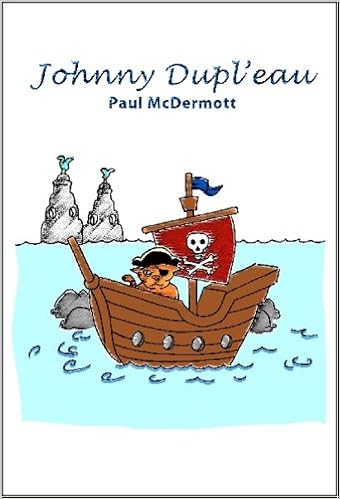

The first book I had published appeared in what ultimately became my final year of teaching. The family ‘rogue gene’ [arthritis] made it impossible for me to continue teaching – Drama, Music, PE, English, climbing stairs between lessons … I’d been pontificating in the staffroom about the poor quality of childrens’ books. Head of Dept. challenged me “if you think you can do better …” Six months later, hey presto! Johnny Dupl’eau was published by a small local Indy publisher. It’s the tale of a band of not-very-good pirates and their escapades, intended as the ‘lead volume’ of a series. The publisher has since ceased trading, but I have 2 more complete yarns and I’m looking for a new publisher.


I’ve experimented with writing in a variety of genre. Two exceptions: I don’t feel I know enough about the subject to attempt writing a Western, and Smut – however you dress it up by calling it ‘Erotica’ – doesn’t interest me.
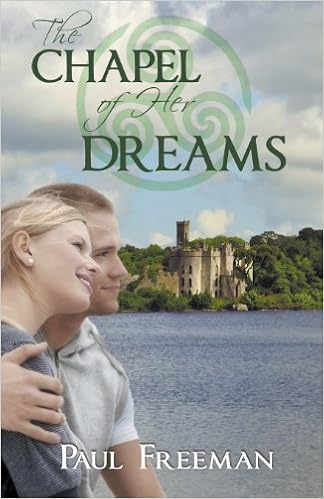
The Chapel of Her Dreams sounds like a Romance, and there’s a simple love story in its pages, but the main thrust of the tale is Celtic myth & legend. It’s inspired by research into my own family history.  This book is the first volume of a planned Trilogy. Book 2 is almost ready for first draft editing.
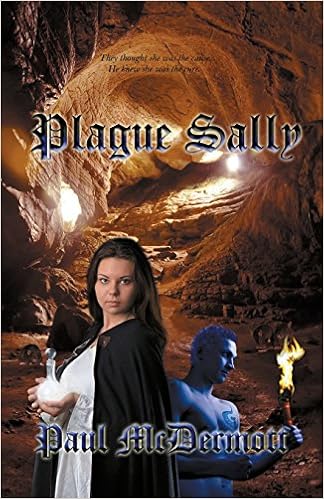

Plague Sally is a historical fantasy, set in 13th Century Britain during an outbreak of the Black Death. Sally is a gifted healer, but when she cures people of the disease she is accused of being a witch and must run for her life.


Classic Act Books has pencilled in another historical of mine, provisional date is still TBD but hopefully before Christmas. Working Title: Perori, Peacebringer. Perori is a musical instrument (a lute) with magical powers. Her bard, Easten, uses her to complete a quest. This has also led to a sequel, which I’ve started writing.
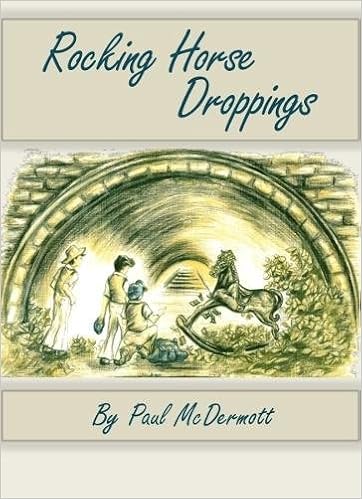

Rocking Horse Droppings. Like buses, you wait for ages then two come along at once …
This is a childrens’ book. Published on World Book Day [March 2nd] it tells the tale of a group of friends who go to a local park to play cricket and find themselves transported to Liverpool, 1941 during the Blitz…

I have on file completed mss in several genre. Chronological is as good a listing as any other:

Disaster scenario: a new powerful strain of the Rabies virus in the UK.
Political satire. Liverpool/Merseyside lose patience with an incompetent London government and declare the region an Independent Republic.
Global Warming is about to destroy life as we know it – one last chance to save the earth
International drug-smuggling scenario spreading over Ireland, UK, Denmark, Sweden and Germany
Craig [central character] has to ‘go off radar’ because he owes money to the ‘wrong people’ – loan sharks. How does he survive with NO money, no resources, no place to stay?

I also write music: I’m working on a YA “rock opera” and the scripts to a couple of short plays (none of which have yet been performed). One of the plays is a commissioned work for a local history group who have asked for a play about a group of Tourists learning the history of one of Liverpool’s oldest streets. Earliest records of Liverpool are based on seven streets (which still appear on the map) spread around the docks.


3. How do you come up with names?

I still remember most of the alphabetical list of names of my class mates from school & university. It’s as good as any other list – unless I’m writing a ‘true’ historical, where the names are a matter of record.


4. How do you come up with ideas?

A lot of my inspiration comes from Dreams – the Trilogy beginning with The Chapel of Her Dreams is one example.
I keep a stack of notepads at the side of my bed and frequently scrawl a few almost-illegible words when I half-wake in the middle of the night with an Idea.
I also try to base work on events and people I read about in the local press & media.


5. Why is originality important in fiction? Or is it important?

Originality. In Gilbert & Sullivan’s Savoy operetta The Mikado one of the characters says he is merely “intending to give artistic verisimilitude to an otherwise bald and unconvincing narrative.” This verbiage is actually pretty good advice.

6. What would you consider a good example of originality in your fiction?

In The Spear of Destiny I’ve kept very close to the recorded facts of the sinking of U-534 but I decided to add the Spear. I did this because of Hitler’s known weakness, superstition. He believes he has found a powerful secret weapon which he can use to turn the War in Germany’s favour. This light drizzle of fiction in what is essentially an account of historical events is my way of adding an original slant to the yarn

Think that’s me done for the night, Jeremy – once again, my thanks for inviting me!

Thank you, Paul! Happy writing! To experience more of Paul's work, he's kindly offered us a sample from The Spear of Destiny for your reading pleasure. Be sure to check out the links to his websites and social media pages, as well as links to where you can purchase The Spear of Destiny. Enjoy! 

Blurb:

In 1945, U-boat Kapitän Herbert Nollau must deliver a weapon which will turn the war in Germany’s favour. His orders are delivered verbally. There will be no written records... and no witnesses.

Alone, far from home, hunted by the Danish Resistance and the might of the Allied Forces, he must obey either his final Orders…or the inner voice of his conscience.

Excerpt:

Überlojtnant Herbert Nollau stood with his Zeiss nightglasses glued to his eyes, impervious to the rain whipped across his cheeks by half a gale. This howled almost exactly at ninety degrees to the tide, which had just reached the full but had not yet begun its retreat. His command craft, U-534, sat uneasily at anchor, dipping at bow and stern in the current, yawing appreciably as frequent Force Ten gusts buffeted her broad flanks. Low, heavy rainclouds hunkered closer, seeming to settle on the upper branches of the natural pine forest which spread untamed, unculled, across the low hills of Schleswig-Holstein.

An identical pair of black Opel staff cars bracketed a canvas bodied Mercedes half-track transport wagon, all three vehicles picking their way carefully along an unmarked country road. The headlights were taped down to the size and shape of a feral cat's vertical slits, acknowledging the strict rules governing all traffic during the hours of darkness. The road to the harbour just outside Lübeck was neither tarmac’ed nor enhanced with any form of lighting. The drivers were obliged to steer cautiously around every twist, using the gears and brakes more frequently than the accelerator.

"Amateurs!" he thought to himself, as the three sets of headlights crawled slowly closer.

He blanked the thought as soon as it intruded on his consciousness, forcing himself back into State-approved Wehrmacht thinking, based on purely practical matters directly related to carrying out current instructions, with maximum efficiency, without question. He pulled the collar of his oilskins closer around his throat in a futile attempt to prevent the rain from seeping through, soaking his uniform. Raising his night glasses once more, he cursed the weather, the Wehrmacht and the world in general, feeling more exposed and vulnerable with every minute that passed as he waited for the convoy of lights to crawl closer, carrying the equipment which he had been ordered to collect. It bothered him that he was expected to set sail immediately, and await orders concerning his destination by radio once he had cleared the bay and entered Store Bælt: technically, that section of the North Sea was neutral Danish waters, and if he were to remain on the surface for any length of time in order to receive orders …

As the lights snaked around another pair of curves and began their final descent to the shoreline and the jetty where U534 was waiting, Herbert Nollau realized that he had on board a much more powerful sender/receiver than any other U-boat: in fact, not just one but two radios equipped with the Enigma cryptographic programme had been installed, ostensibly for testing. With a sudden jolt, the deceptively young-looking Überlojtnant realized that this technology was far more sophisticated than that which had previously been regarded as the best in the world: apart from being guaranteed unbreakable as a code, it could also send and receive radio signals without his craft needing to surface.

He shook his head to clear the worst of the pools which had formed in the upturned brim of his sou’wester and made his way down the ladder bolted to the side of the conning tower, aiming to be waiting on the quay before the three vehicles wheezed to a halt. His mechanic’s ear analysed and diagnosed a list of faults he could clearly identify from the laboured chugging of each engine. Furious at this indication of inefficiency, a corner of his mind decided that he would have had the senior officer responsible for each vehicle court-martialled, if the decision had been up to him. In spite of the horrors he had witnessed in three years of naval warfare, he shuddered. His orders, distasteful though they might be, were crystal clear …

Two gaunt, silent shadows slid with simultaneous choreography from the rear seat of each of the Opels: their sleek black trenchcoats almost touched the planks of the jetty, glistening in the starlight as if the officers wearing them had been marching for hours in the rain rather than just stepping out of a warm, dry car. Nollau fired off his most formal salute: the four SS-officers responded with a world-weary, bent-elbow half-salute and pointedly refrained from returning Nollau’s “Heil, Hitler!” One detached himself for a moment and gave a hand-signal to the driver of the canvas-sided truck.  The driver immediately hammered his fist twice on the bulkhead behind his seat. Four soldiers appeared over the tailgate of the wagon and began to manoeuvre something long and heavy out of the cargo space.

Turning to face his command meant that Herbert Nollau had to turn his back on the four staff officers. Somehow he managed to do this with an insolence which stated quite clearly that, as far as he was concerned, they were barely worthy of his contempt.

He placed a small, shrill whistle to his lips and blew, one long (but not overloud) blast. Within ten seconds, the deck was populated by about twenty matelots, standing at ease, who somehow contrived to arrive from nowhere and in total silence. Close to the bows, and just for’ard of ’midships , cables were deployed from two small jib cranes. Within seconds, the submariner crew were on the jetty, taking the unidentified cargo from the shoulders of the four soldiers and hoisting it with ease onto the foredeck, thence by some lightningfast legerdemain out of sight below decks. The crew had followed, leaving Überlojtnant Nollau as the only member of the Senior Service still on the jetty. At a silent gesture from one of the anonymous black trenchcoats the four soldiers climbed back over the tailgate, into the truck. After about four attempts, the driver managed to coax the engine into life and began to back and fill, facing back the way he had come.

As he completed the manoeuvre and gunned the engine to set off up the hill, the four SS officers opened their trenchcoats to reveal the muzzles of rapid fire MP40 machine pistols. With one accord they raised their weapons and sent round after deadly round of ammunition into both the cab and the rear of the vehicle, holding the triggers steady. Before the hail of bullets ceased, the fuel tanks of the wagon exploded, sending flames soaring high into the night sky, setting small fires in the tree tops as they lost their intensity and curled back towards the ground.

Suddenly, Herbert Nollau’s orders seemed fractionally less dishonourable.

Having emptied their weapons, the four executioners appeared to have rediscovered some of their habitual swagger and pride. Crashing the butts of the now-empty weapons against the rough wooden planking of the jetty they raised their right arms to the fullest, and screamed: “Heil, Hitler!” as their heels crashed together in perfect unison.

Sick to his stomach at the pleasure his countrymen took from the callous murder of fellow Germans, it was all Herbert Nollau could do to raise his arm, bent-elbowed, in the less formal salute he would never under normal circumstances have accepted from others nor used himself.


About the Author:

Website: www.PaulMcDermottBooks.webs.com
My Facebook page is https://www.facebook.com/paul.mcdermott.7737
Also: www.whimsicalpublications.com and www.writerschatroom.com

The Spear of Destiny is available at:

Publisher’s website: http://www.classactbooks.com/component/virtuemart/historical-fiction/the-spear-of-destiny-detail?Itemid=0
Amazon: https://www.amazon.com/dp/B06ZZKRH5K/
Smashwords: https://www.smashwords.com/books/view/718491

Tuesday, April 25, 2017

Nifty Newly, featuring Leslie Heath


Writing interesting characters is much easier when you've met a few. And as a night shift emergency nurse with over a decade of experience, Leslie has met more than just a few. Please welcome fantasy author, long-distance runner, pet-rescuer, and people-watcher Leslie Heath.


What's the title of the book you're currently working on? I'm working on the second installment of the Nivaka Chronicles, but I haven't settled on a title for that work yet.

How many books have you written? Published/unpublished? The Last Mayor's Son was my first novel. I'm editing my second book, and have outlined and begun to write the third.

What inspires you, as a writer? I love people-watching. Whether I'm at a mall, a theme park, or a Renaissance Faire, I pay close attention to the people around me: how they walk, how they talk, how they interact with each other, and how they handle challenges. They inspire me to create interesting characters who react to the world and events around them, as well as events that push those characters to their breaking points.

How do you come up with names? Sometimes, I use online name generators. Other times, I've spent hours playing in translator apps, searching for just the right combination of letters. I even named one of my characters after my dog; I just translated his name to a different language.

How do you come up with ideas? I usually start with an interesting detail, whether it's plot, character, or setting related varies from story to story. For example, The Last Mayor's Son was borne from a day at a treetop adventure park. I wondered what it would be like to have a whole town built at that height, and the story evolved from there.

Why is originality important in fiction? Or is it important? It's important to develop characters that stand out in readers' minds. If you manage that, along with a plot that engages the readers, you'll have a winning combination.

What would you consider a good example of originality in your fiction? In The Last Mayor's Son we meet Aibek, a young man raised by his aunt and uncle in the city. We get to experience the wonder of discovery when he arrives in Nivaka and sees how glorious a village in the treetops can be. Nothing in his previous experience has prepared him for the shock of a fully developed civilization built fifteen feet off the ground, and most readers haven't read anything similar, either.

Thank you so much for joining us Leslie, and for sharing your approach to writing original fiction! If you would like to experience more of Leslie's work, please check out the excerpt below. At the bottom of the page are links to her websites, as well as links to where you can purchase her book, The Last Mayor's Son. Please show your support! 

Excerpt from The Last Mayor's Son:

None of the travelers spoke as they carefully picked their way along the narrow trail. After a few minutes of walking, Aibek began to hear sounds of small animals moving in the brush, then birds singing overhead. He relaxed somewhat now that the silence was broken by
what he assumed were normal sounds. A short time later, he heard a new sound—the soft tinkling of water flowing somewhere nearby. The sound gradually grew louder as they walked, and soon Aibek saw a narrow stream with a rocky bed just to their left. He picked up the pace and hurried toward the welcoming brook.
When he reached its banks, Aibek dropped his pack on the mossy ground and stooped to drink from the cold, clear water. Beside him, Serik and Faruz did the same. Though the trees shaded them from the midday sun, the heat and humidity were oppressive, and the travelers smiled as they splashed the icy water over their sticky faces.
Aibek knelt on the stony bank and dunked his head under the swiftly flowing water. He gasped as he sat up, his hair dripping the cold water down his back and soaking his white linen shirt. He sat for a moment and stared up into the dense foliage above him. How could a village exist among those branches? What would the people have to eat? He looked down at the stream again and watched as a school of colorful fish swam downstream. How would they cook food in the trees? He hoped he wouldn’t be expected to eat raw food from now on. He shook some water from his hair, then bent and used his hands to drink from the cold stream again.
“It’s not much farther from here,” Serik announced.
Aibek smiled to hide his apprehension, then rose to his feet and gathered his pack. He barely noticed Faruz’s anxious expression as he waved his friend on by. They carefully picked their way over the crumbling bridge one at a time, with Serik leading the way. Faruz went next, and Aibek followed close behind.
As they walked, Aibek kept looking up into the densely-packed branches, trying to spot some sign of the civilization he knew somehow existed up there. He thought about his earlier imaginings of rope bridges and small treehouses. Was that what his new home looked like? Would he be able to see it among the heavy branches and thick leaves? He’d need to learn to navigate above the ground before he could consider taking over as the mayor. A new stab of apprehension struck him. What if he humiliated himself trying to learn? At least the thick moss on the ground would cushion his landing if he fell.
His thoughts kept his eyes trained on the foliage above the trail for long minutes. He looked down just in time to avoid colliding with a tree. He stopped short and looked around; his friends had continued around a bend in the path. Maybe he should pay closer attention to where he set his feet.
After that, he made sure to lower his eyes to the path at least once every three or four steps. Aibek certainly didn’t want to arrive at his new home bloodied and bruised from a mishap on the trail. Still, his thoughts remained distracted. He’d grown up in an area with few trees, and he’d never seen anything like the tall, thick trunks packed close together in this forest. The heavy foliage overhead obscured every trace of sunlight, leaving the path below shrouded in shadow and darkness.
Finally, Aibek peered into the leaves above the path and thought he could make out a wooden railing between patches of leaves. It was high in the trees; a large house could easily fit underneath the hidden structure. It looked like some sort of walkway—a sidewalk made of wood suspended in the trees. As he stared and continued walking, more of the wooden structure came into view between the branches and leaves. He slowed his steps and nudged Faruz, mutely pointing up at the mostly-hidden structure.


Find out more about Leslie at:

Website: www.leslieeheath.com
Facebook: https://www.facebook.com/LeslieEHeathAuthor/#
Twitter: @leheath_author

Buy the Rest of the Book Here:

Publisher’s website: http://www.classactbooks.com/young-adult/the-last-mayor-s-son-762-detail
Amazon: https://www.amazon.com/Last-Mayors-Son-Leslie-Heath-ebook/dp/B01N0RQ3VZ/

Saturday, April 22, 2017

Review of David Gowey's Jire

JireI recently finished David Gowey's short story, Jire, a beautiful piece that defied a lot of my expectations. He avoided all the easy answers to the problems he raised, and the result is a very well-thought out, heartstring-pulling piece. You have to feel something for Jire. You have to want better for her. Her pain is so real, and her situation so familiar. The decision she makes at the end, whether you agree with it or not, begs the question: "Would I have had the strength to do that?"

Here's the review I wrote for Goodreads:

 In Jire, Gowey takes a serious look at poverty, colonialism, and the endurance of the human spirit. With the odds stacked against her, Jire has to balance, every day, between the weight of caring for a father who bleeds her dry, and the weight of a society that demands every bit of effort she can muster in exchange for food. Every choice she makes influences her chances for survival.

Gowey offers us a day in the life of Jire, a day that turns out differently in many respects, and yet the same in others. The language is elegant and yet real, the dialogue terse and believable, and the message is universal.

If you would like to experience the world of Jire for yourself, check out the link below. As of the time of this posting, Jire is free for those with Amazon Unlimited.

https://www.amazon.com/Jire-David-Gowey-ebook/dp/B06X9RHG4W/ref=asap_bc?ie=UTF8

And if you would like to learn more about David Gowey and his other fiction, check out the interview I did with him just a couple weeks ago:

http://www.darksomethorn.com/2017/03/nifty-newly-featuring-david-gowey.html

Nifty Newly, featuring Kenneth Gordon


Ken is a fellow Class Act Books author, with a focus on science fiction titles. If that weren't enough to take up all his time, he's also a web designer, an app and game developer, and he has a brown belt in kung fu. Right on! Please welcome to Nifty Newly, the one and only Kenneth Gordon.


What's the title of the book you're currently working on? 
In My Blood is about to come out in May.

How many books have you written? Published/unpublished? What genre? 
5 books so far. One is coming out in Aug. My 6th book, I'm still working on. All are Science Fiction.

What inspires you, as a writer? 
It could be almost anything. This book coming out was inspired by my cat scratching me in a particular pattern.

How do you come up with names? 
For me names are quite specific. I will spend time looking at baby name sites, sometimes name generators are helpful. I have a meaning in mind, so it can be difficult to find a name that matches that meaning. Most lead characters, however, have common names so the reader can more easily identify with them.

How do you come up with ideas? 
All I need is one flash of inspiration and I'm off and running.

Why is originality important in fiction? Or is it important? 
I'd say it is very important. It's up to us as writers, especially in the sci-fi realm, to take what is known and expand on it, to look towards the future. Originality will keep people coming back to your books. If each one follows the same formula, what is in it for the reader? If you know the detective will solve the case in five minutes every time, what is the point of reading it?

What would you consider a good example of originality in your fiction? 
From my soon-to-be-released In My Blood, the ship that travels to the alien planet performs a series of quantum jumps. During them, the ship appears transparent and you can see the stars whizzing by. I do not think that has been seen before.

Thank you so much for sharing with us today, Ken! If you would like to learn more about Kenneth Gordon and his newest book, please check out the bio, blurb, and excerpt below. I've also included links to his website and social media pages. 

Web Site: http://kennethgordonnovelist.com/
FB page: https://www.facebook.com/KennethGordonNovelist/
Twitter: https://twitter.com/KennethGordon69
Publisher’s website: http://www.classactbooks.com/index.php/our-authors/manufacturers/kenneth-gordon

About the Author:

Kenneth Gordon grew up in Milford, NH and still lives in that state. When he isn’t writing scifi-infused horror novels, he plays PC games, electric and acoustic guitars, and drums. He also holds a brown belt in Kung Fu.

Blurb:
There is a plague on an alien world and emissaries have been sent to all inhabited planets to find the Chosen One. It is he that will cure that plague that now afflicts so many.
Thomas Anderson, from New Hampshire, is just about to start his third year of pre-med at Emory University when he meets a strange little man.
Tom is whisked away to the whirlpool galaxy as he starts researching the plague and begins working towards a cure. Little does he know that the cure will cost him everything! He must decide if he is willing to give up his life for a people he doesn’t know on a world that is not his own.

Excerpt:
“This is what we know currently. The disease originated on the second planetary orbit. The Crown Prince and two companions went to the jungle world on an exploratory mission. The Prophet had already told him before he left not to eat from the Faluth tree. After a couple days of exploring, they came upon one of those trees. He was warned again not to eat it by one of his companions, but I suspect his pride overcame his good judgment. I postulate that he may have said ‘I am the Crown Prince, I can do anything I want.’ Thus mocking the words of the Prophet. Six months later, he was dead."
“I don’t understand. How could a fruit kill him?”
“Not only him, but his companions and the royal physician who treated him. Now it has spread to the rest of the province. There are even reports it is in the other provinces as well. If you do not act, our entire species is doomed, along with the other people groups on our world.” The alien lowered his head, closed his eyes and made some sort of humming noise.
“That is our ‘Jick-now,’ funerary song,” Kai explained.
“Again, how can a fruit kill?”
El stopped humming and continued, “We don’t know. He presented with gah-fla symptoms for a couple of days, but seemed to recover. Six months hence, he was at a gathering, took a drink, and dropped to the ground, dead. It was only after we performed a post mortem that we found his heart was completely black.”
“What is the normal color?”
“Red to pink.”
“So, much like us; humans, I mean.”
“Indeed.”
“I really don’t know what exactly I can do. I’m only in my third year of pre med with one infectious disease class under my belt.”
“My son tells me that you are the Chosen One, therefore you will cure this plague. I must confess to you, human, that I have my doubts about you.” Thom stood up and took off his shirt. El-min’s eyes grew wide and his mouth opened wider. “You are indeed the Chosen One. Forgive my doubts.” El-min bowed his head low.
“Nothing to forgive.” Thom said as he put on his shirt, “Truth be told, I’m not sure I can live up to your ideal, but I’ll try my best. Can I get—”
El-min raised his hand. “I just received a message from the ship that we are about to make our first jump. Please sit down and prepare yourselves.”
The three sat down in the chairs.
“Don’t we need seatbelts or something?” Anderson asked.
“Remember the car?” asked Kai-min.
“Yeah.”
“Passive restraints?” the younger alien said.
“Oh, yeah. Ok, same deal.” Thom said as his body stiffened, not knowing what to expect.
“Jump in 3…2…1…JUMP!”
Thom closed his eyes tight and gripped the chair with a white knuckled grip. There was a strange rushing sound. He dared not look, but his curiosity got the better of him and he peeked open one eye. It was as if space itself were passing through the ship and him. He could see stars, constellations, planets; like the ship was invisible, and he was traveling alone in the dark, cold, vastness. Particles passed by him; he felt he could reach out and touch the very fabric of spacetime itself. In an instant it all compressed and whirled past him at incomprehensible speed, yet the ride was as non eventful as sitting on his own couch. Then the wall of the ship came back into view, and the trip continued as if nothing had even happened.


In My Blood will be released in May by Class Act Books. It will be available from the publisher’s website and Amazon.com.

Saturday, April 15, 2017

Nifty Newly, featuring James Austin McCormack


Welcome to another Nifty Newly! James is a Class Act Books author, like me! Unlike me, he's also a college lecturer from Manchester, England. In addition to writing, he loves hiking and playing the guitar, though not at the same time. Please welcome James Austin McCormack


What's the title of the book you're currently working on? 
The Clockwork Man, a sort of Arabian Nights/sword and sorcery fantasy novella. I have also just finished the last book in my science fiction series, Dragon. The book is called The Prisoner of Valathia and will be out in June this year

How many books have you written? Published/unpublished? What genre? 
I have two novels, four novellas and a quite a lot of short stories in various anthologies. published so far. I also have about twenty or so unpublished short stories which may or may not see the light of day sometime in the future. I write speculative fiction, mainly science fiction, horror and fantasy.

What inspires you, as a writer? 
Escapism, pure and simple, the more I can create my own worlds, setting and characters the better.

How do you come up with names? 
I often look up real and ancient names, then give them a twist. It's too easy to come up with cheesy sounding names when writing science fiction, especially of the space opera variety. I try to avoid this at all costs.

How do you come up with ideas? 
I'm not a prolific writer by any means. I tend to write 300 to 500 words over the course of the day. I find when I do this the ideas keep coming. All I need to do is give my subconscious time to work on plots and themes. This wouldn’t happen if I set aside a writing hour or couple of hours like a lot of authors do.

Why is originality important in fiction? Or is it important? 
I think it all depends on what you are trying to do. Personally, I enjoy writing pulp flavored speculative fiction (mostly sci-fi). I'm not trying to break new ground or write a post- modern classic. I write the type of stories I enjoy reading. I don’t worry too much about being that original.

What would you consider a good example of originality in your fiction? 
Well, if I had to point to something it would be the blending of genres. Several reviews of my first science fiction book, Dragon, have mentioned how different and original the ending is, as much fantasy as science fiction. The last installment is even more of a mix, equal parts science fiction, fantasy and also with more than a touch of horror in there as well. There is also, as with all the books in the Dragon series, a large dose of humor.

Thank you so much for joining us, James! If you'd like to find out more about James's fiction, please check out his social media and author pages here: 


There are more purchase links following the excerpt. 


After the death of the Tuolon Ambassador Lagua and the failure to bring the non-humanoid worlds into the Alliance, Sillow and Brok’s long partnership is finally at an end. Now a reluctant solo agent, Sillow is called upon to undertake his first mission, investigate the Tower, a high-tech prison complex along with the oligarch who runs it, a mysterious nobleman who calls himself Tamerlane.

Seeking evidence to prove Tamerlane is responsible for a series of terrorist attacks, Sillow quickly uncovers the sheer scale of his plans, a lethal military strike on all four humanoid home worlds. Caught and imprisoned however, the Sylvan finds himself helpless to warn the Alliance of the coming danger.

All the while, something has been evolving, growing stronger inside the Tower, something intangible yet far more dangerous than Tamerlane ever could be, a being implacably opposed to all life in the galaxy.

And only Sillow has any chance of stopping it.


EXCERPT from Dragon: The Tower of Tamerlane:

Laser fire and shouts echoed as Sillow was thrown headlong into the cell.

What are you?” a female voiced asked. “Some type of green midget?”

Sillow groaned and tried to get up. He settled for a slumped kneeling position.
I’m a Sylvan,” he replied. He squinted into the shadows and saw a figure seated on the upper berth of a bunk. He could make out little apart from a muscular, yet shapely pair
of legs. “Who are you?”

The figure jumped down from the bunk. She was an Amazonian, strong and athletic with an impressive cleavage and long chestnut hair falling around her shoulders. She was
also extremely pretty despite the artificial eye and cheek implant. She stretched out a perfectly formed silver arm, extending her hand. “Titanya.”

Sillow’s eyes widened. “The Pirate Queen?”

The woman nodded.

The Sylvan took her cybernetic hand and let himself be hauled to his feet. He found himself head high to her magnificent chest.

Sillow,” he replied, smiling at her breasts. “I’m from the Alliance.”
Up here, short stuff,” the woman told him.
Slowly and very reluctantly, Sillow turned his attention upwards. He grinned. “Nice to meet you.”

Outside, cries and weapon fire continued to echo through the halls.

Titanya frowned. “Any idea what all that’s about?”

Whole place is going crazy,” the Sylvan replied. “Something got into Tamerlane’s AI system.”

The woman took a couple of tentative steps toward the door. Screams echoed through the walls.

Sounds like a warzone out there,” she remarked. “You sure the AI is causing all this?”

Sillow frowned. “You know, this is going to sound kind of crazy but…” he paused, running a hand over his pointed chin.

What?” Titanya demanded.

Well, it kind of looks like the one causing all this is Darius Drake. You heard of the guy?”

Oh yeah,” the Earth woman answered. “We’ve met.”

Well, somehow he’s put himself into the computer system.” Sillow gave an embarrassed shrug. “Sounds sort of off the wall I know.”

There was a sudden explosion and flames tore through the slits at the top of the door.

Look out.” Sillow threw himself at Titanya, knocking her off balance and sending her tumbling to the floor. The Sylvan landed on top of her, head buried in her thick auburn locks. A fireball tore past them, turning the bunks into cinder.

It was some moments before Sillow glanced up. He found himself looking at the stern, beautiful features of the Terran woman.

You okay?” he asked. “Just so you know, that was me protecting you.”
Just so you know,” Titanya replied, “under any other circumstances I’d have busted your jaw for that.”

Sillow grinned. “You mean saving your life?”

Titanya flung the little Sylvan back onto his feet. “Yeah, right. I can’t believe a pipsqueak like you got the drop on me.”


BUY LINKS:


Wednesday, March 29, 2017

Nifty Newly, featuring Ruth Crook


Some authors have a gift for natural-sounding dialogue that makes the rest of us jealous. Ruth Crook is one of those authors. I met her briefly at Southern Virginia University before I graduated, and as I read through her sample for this interview I couldn't help but wish I'd gotten to learn more from her before I left. She definitely has something to share with the world. That said, let me introduce you to my friend, Ruth Crook.


What's the title of the book you're working on? It doesn't have a name yet. Working vague idea is 'my dragon book;' because I only have one so far.

How many books have you written? Published/unpublished? What genre? I've got at least three completed manuscripts, two of which are co-written. All of them are fantasy, one also somewhat meta-fiction.

What inspires you, as a writer? Music, great stories of any medium, friends who enjoy brainstorming. Sometimes random life experiences that suddenly seem to fit characters that may or may not have been there before.

How do you come up with names? Depends. Sometimes I go research mode and go to sites like behindthename.com. Other times I just throw random letters together until something feels right or gives me an idea of a personality. Also looking at credits of movies is fun.

How do you come up with ideas? See my inspiration. Oh and research. I love doing research on something pertinent at the time, whether it be sharks or a historical event or new technologies. Everything has a part in a story; the question is which one is yours.

Why is originality important in fiction? Or is it important? Originality is making someone think about something in a way they haven't before. It is important because it will make the story mean something to the person who reads it. It is also not the only important thing, because almost no perspective has not been covered before. It is just how many people do you manage to help see things anew?

What would you consider a good example of originality in your fiction? Um... Well the main character in my dragon book has a horrible stutter that partially drives some of the anticipation and actual plot. I haven't seen a lot of that problem in fantasy.
Another might be... One of the manuscripts has a character who is really ambiguously neutral except for their own self interest, but does care about others, but also manipulates them to help protect them?
Or the fact that one of my villains is a rather horrible person to all except his daughter, who he still isn't great to and doesn't hide the fact that he's a murderer, but she still manages to have normal morals and they love each other in a great father/daughter way? Somehow?
I suppose if you generalize it all sounds done before. But it is the perspective I enjoy sharing that could perhaps be original.

Thank you so much for joining us today, Ruth! Please support Ruth by checking out the excerpt below, after which you'll find a link to some of her fan-fiction. 


Excerpt from Ruth's 'Dragon Book,' Title TBD. 
NOTE: The following excerpt is not from a finalized draft; all content is subject to change. 

“You sound… tired, Grehsn.”

“Graysen,” he automatically corrected, then swallowed. “I-if you please, Lady Almyra.”

“Right, Graysen.” She glanced out the cave. “The sun is getting lower. Come back tomorrow and I will have something for you to do.”

Graysen blinked and chewed his lip. “…R-right. Of course.” He had forgotten to ask if she needed anything today. But he would probably spend the next ten minutes trying to get the sentence out.

“Yes. G-good day, Lady Almyra.” He bowed gratefully, and left.

As he left the clearing, he saw the remains of the bonfire again and heaved a sigh to himself. He’d meant to bring up the embers, the smoke, how she would attract attention. He should actually probably bring that up. He considered going back-

“Graysen!”

He jumped, fell over, and scrambled to get near a tree. Breath heaving, he looked and saw Pieter somewhat close. He relaxed a bit, trying to get his breathing easier again.
“P-Pieter! Pieter, wow, um. You… you scared me.”
“I scared you?” Pieter scoffed. “Yeah; and you are a clodded lucky idiot! That… was what I think it was? In the cave?”

Graysen’s heart rate flew. “W-what do- do you think- um, what-”

“A dragon, Graysen!” Pieter hissed, coming close.

Too much, too soon. Graysen felt faint.

“… Graysen?” Pieter asked, sounding a bit distant.

Graysen breathed a bit, thankful he was already on the ground, closed his eyes, focused. Breathed again.
“Um… O-ookay. S-sorry. Ah... what?”

“I said, a dragon,” Pieter repeated. “And you were talking to it. So no fainting on me because that won’t work. I will wait.”

He sat down to prove his point, watching Graysen.

Graysen had been so tired and muddled before, but this, Pieter’s gaze, set him on edge again, though didn't clear any thoughts. Graysen looked everywhere else, trying to find an escape, trying to find an excuse not to talk about it, about her. The dragon. Lady Almyra. Was that even a proper way to address a dragon? She wasn’t a lady, was she? Or maybe she was- why was he worrying about that now?

“Um.”

He cleared his throat, put a hand through his hair, breathed again. Glanced nervously at Pieter.

“Y-you… you heard? Saw?”

“Heard. And saw, a little. I’ve not gotten too close, tried to stay downwind.”

Graysen nodded, thankful for that, still not focusing well. “Um… How did- W-why- Um. Y-you’re here. Why?”

“Answer me first, Graysen. That is a dragon? And not some… I don’t know, a… strange… bear, or something?”

He sighed, obviously not even believing himself.

Graysen shook his head. “Sh-she’s real. Definitely. I… I- there were flames. Once, maybe twice. And- and the fire was gr—” Oh. The embers. He swallowed. “… Did you… see it? Smoke?”

“What? Where?”

“O-outside.”

“Oh, you mean the bonfire outside the cave? Yeah, that certainly got my attention a day or so ago. I figured it might be something to do with the festival, since it was kind-of closer to town than we were— I was asked to look into it, though no one is real worried about it. Well, they aren’t right now. They will be when I tell them.”

His face was somber.

“N-no, no! No, Pieter!” Graysen grabbed his friend’s shoulders. “No, please-- Y-you can’t. Please, don’t- don't d-”

“Graysen!” Pieter glared at him, confused. “It’s a dragon! You can’t just- just hide it! Especially in a forest! Close to town!”

“She’s not- She- Aaaahh…” Graysen floundered. Pieter couldn’t go gather people right now, when Graysen still had no idea why she was there, what she wanted. “Pieter, please.”

“Why?” Pieter demanded. “You aren’t making sense, Graysen!”

“She-”

“Who?”

“The dragon! Lady Almyra! She- she’s the dragon. She’s… here, for… I don’t know. But- but I’m trying to… to find out. She’s… um, asked me to… to do things for her. Sort-of.”

“Graysen…” Pieter said. “I’ve never heard of a dragon in the forest. Or speaking. Now I've just seen both, but-”

“And she’s not done anything!” Graysen interjected. “Other than… than boil leaves! And- maybe eat a-a deer or something!”

“Graysen, she’s a dragon,” Pieter repeated, looking his friend in the eyes. “Even if she talks. Even if she hasn’t done anything so far. Even if- wait. What sort of things does she ask you to do?”
Graysen  shrugged. “I don’t know, just… things! I-I've gotten leaves for her, those pots I asked for, a-a bell…”

Pieter gave him a strange look, but Graysen just shook his head.

“I-I… don’t know, understand, much. Yet. But… I-I’m trying. And… I think- she’s getting used to me. Um. She hasn’t eaten me, at least. Even... when I brought Duncan.”

“You brought your dog?”

Graysen grimaced. “Once. Father insisted.”

“Your father knows?!”

“No! No, no, nobody knows!” Graysen insisted. “N-nobody- at all! Just… just me.”

Pieter looked at him incredulously.

Graysen sobered a bit. “If- if I just came to you, and said I’d found a dragon, would you believe me?”

Pieter rolled his lips.

“And said- that I talked with her?”

“Okay fine,” Pieter said, letting Graysen go. “Point. But…”

He looked back in the cave’s direction.

“But…” he looked back at Graysen, confused. “How are you still alive?”

“I-I told you,” Graysen said. “She… she’s asking me to- to do things for her. Because… I don’t know. Um. But… but she is. Has.”

“Why?”

“I don't know!”

“Right. Sorry. I mean…” Pieter trailed off, rubbing his neck, then shook his head and sighed. “Okay. Fine. But… why haven’t you, you know, tried… doing something?”

“I am!”

“I mean, you know, acting on something, or-”

Graysen looked at him despairingly.

“… Okay right. You. Alone. And… dragon. Dragon.” He sighed. “Wow.”

“Look, I’m- I’m trying to find out why she’s here, but… but it’s hard. And- and she’s not really… Um… Helpful?”

He grimaced. That wasn't the right word.

“She’s a dragon, Graysen.”

“I heard you the first fifty times!” Graysen snapped.

Pieter raised his eyebrows.

Graysen looked down, slightly red, from all of who knew what.

“S-sorry…”

Pieter went on. “Okay, so… it’s- she’s a dragon. With a name? …Did you-”

“No,” Graysen cut him off. “She gave me her name. She does talk.”

“… Lady?”

Graysen turned more red. “W-well, that part I added. Because… well… she sounded… noble? I mean, how do you address a dragon?”

Pieter grimaced. “Right. Well… does she seem, I don’t know, hungry? Or… flame-ish?”

“No. Wait. What?”

“I don’t know. Does she seem about to attack anything?” Pieter asked, gesturing.

“No.”

“Are you sure?”

Graysen threw his hands up.

“I don’t know!  I-I don’t exactly have- experience in this kind of thing! Do you?”

“No… Right.” Pieter sighed again, ran a hand over his head. “What- ...We should go to Lord Straub- But Lord Blodgett is there too. Felsen! I doubt Lord Blodgett would do anything to help.”

“W-well, he might-”

“No, because even if he did, he'd then take credit and place blame and we’d end up with an even worse monster, over both lands.” Pieter retorted.

And then Graysen practically saw an idea hit his friend. “P-Pieter…?”

“Graysen… How… ‘reasonable’ is this dragon?”

“Pieter.”

“Tell me.”

“Pieter.”

“Graysen.”

“Pieter.”

“Graysen.”

Graysen sighed. “She… I don’t know. I- I can sort-of talk with her… but, not- not… um, I don’t know about reasonably.  Though, that is probably because… w-well.” He shrugged. “Me.”

“Then, do you think that someone else could-”

“Pieter no.” Graysen interrupted, eyes wide. “No g-going and talking to her! No!”

“Graysen, if she’s reasonable, then maybe-”

“Pieter! Listen to yourself!” Graysen plead, grasping Pieter’s arms.

“And listen to yourself, Graysen!” Pieter retorted. “You’re defending a dragon with a proper name and everything! Trying to... keep her hidden! And not doing a great job at it, either!”

Graysen turned red and looked down, but didn’t let go of Pieter. “… Pieter, she- I don’t- I don’t know what she’ll do with other people. With- with people, really.”

“… Well, what kind of mood was she in when you left?”

“What?”

“Just now. When you left.”

“Um, not- not bad, but-”

Pieter shook Graysen’s hand off and stood up.

“But Pieter! She, um, she… seemed tired! A-and… grumpy! Yes, mad at the world. Not safe.”
Pieter ignored him.

“Pieter, I- I’m not- I don’t-” Graysen scrambled up and grabbed Pieter’s arm again.

Pieter looked at him, face set.

“Graysen. We are desperate. Lord Blodgett is a blot on the land with his own name, and now he’s trying to expand that to your land. Don’t you want to do something about it?”

Graysen’s mouth opened and closed.

“Usually we can’t, I know. It’s the lords that own the land and the merchants who run it. But maybe, just maybe, we can. Maybe this is The Great One sending us help!”

Graysen looked at him dubiously.

“I- I don’t- I mean, Pieter… I don’t think that- that the Great One… uses dragons.”

“Well? Do you have a better idea?”

“Well, maybe… um.” Maybe dragons weren’t what people always thought they were. Although he still had no evidence for that. He was still very afraid that she was just what everyone said dragons were. But she hadn’t been so far, not in the least. Except for the frightening bit. She definitely did that. Although it wasn’t as if she had to try very hard.

“I’m going, Graysen,” Pieter pulled out of Graysen’s grasp.

Graysen watched, his mouth taut as his friend strode towards the cave. Then, he tackled Pieter.


If you enjoyed this and would like to experience more of Ruth Crook's writing, please check out Simply a Backstory, a work of Princess Tutu fan-fiction, available here: https://www.fanfiction.net/s/10523176/1/Simply-A-Backstory